Microbial Systems
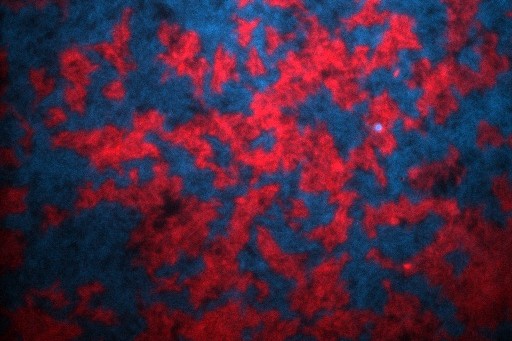
Microbial systems are ideal for studying emergent phenomena because timescales are fast and colonies are easy to manipulate in the laboratory. As a result, the same collective behavior can be modeled, measured and perturbed. In this area, we developed projects that focus on specific model systems and more theoretical ones.
Working with Dictyostelium discoideum aggregates, we showed that fitness tradeoffs between spores and non-aggregating cells can sustain the coexistence of diverse genotypes (Tarnita et al., 2015; Rossine, Martinez-Garcia et al., 2020), and how this diversity is fostered by seasonal environments (Martinez-Garcia & Tarnita, 2017) and increases with the number of life-history tradeoffs (Martinez-Garcia & Tarnita, 2016). On a separate project, we investigated how cell adhesion and fluid flow drive bacterial surface colonization, thus determining biofilm spatial structure and the characteristic range of ecological interactions (Martinez-Garcia et al., 2018).
In addition to this work on model systems, we develop theory that quantifies the outcome of evolutionary dynamics in microbial populations. In recent research, we developed a new analytical method to obtain fixation probabilities in multi-allele evolutionary models, applying it to various models of microbial cooperation, collective behavior and mutualistic clonal interference (Braga et al., 2026).
Selected Publications
- I. Braga, L. Wardil, R. Martinez-Garcia. Fixation probabilities for multi-allele Moran dynamics with weak selection. Physical Review Research (in press) (PDF).
- F. W. Rossine, R. Martinez-Garcia, A.E. Sgro, T. Gregor, C.E. Tarnita. Eco-evolutionary consequences of loners. PLOS Biology 18(3), e3000642 (2020) (PDF).
- R. Martinez-Garcia, C.D. Nadell, R. Hartmann, K. Drescher, J.A. Bonachela. Cell adhesion and fluid flow jointly initiate genotype spatial distribution in biofilms. PLOS Computational Biology 14(4), e1006094 (2018) (PDF).
- R. Martinez-Garcia, C.E. Tarnita. Seasonality can induce coexistence of multiple bet-hedging strategies in Dictyostelium discoideum. Journal of Theoretical Biology 426, 104-116 (2017) (PDF).
- R. Martinez-Garcia, C.E. Tarnita. Lack of ecological and life history context can create the illusion of social interactions in Dictyostelium discoideum. PLOS Computational Biology 12(12), e1005246 (2016) (PDF).
- C.E. Tarnita, A. Washburne, R. Martinez-Garcia, A.E. Sgro, S.A. Levin. Fitness tradeoffs between spores and nonaggregating cells can explain the coexistence of diverse genotypes in cellular slime molds. Proceedings of the National Academy of Sciences of the United States of America 112(9), 2776-2781 (2015) (PDF).