Team
Current Members
Postdoctoral Researchers

Guilherme S. Costa
Guilherme is interested in understanding how spatial patterns of home-range organization shape interspecific competition and lead to species exclusion or coexistence. Prior to this work, Guilherme worked on a wide range of topics, including synchronization phenomena and disease transmission.
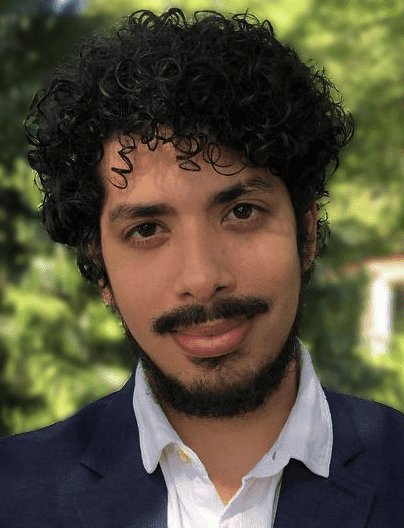
Rafael Menezes
Rafael is broadly interested in studying how individual movement behaviors shape population and community dynamics. To this end, he uses a combination of numerical simulations, spatial pattern analysis, and animal tracking data analysis.

David Pinto-Ramos
David studies spatial pattern formation in arid ecosystems. Using techniques from nonlinear dynamics and statistical mechanics, he seeks to develop mechanistic models and combine them with remote-sensing data and satellite imagery to explain how vegetation patterns will respond in a changing climate.
PhD Students
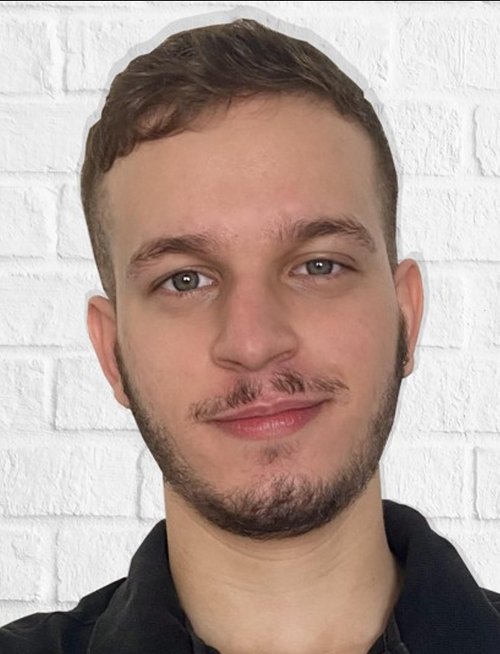
Paulo E. de Cerqueira Junior
Paulo investigates regime shifts in dryland ecosystems, combining functional network analysis and Bayesian inference in simulated and remote-sensing data.
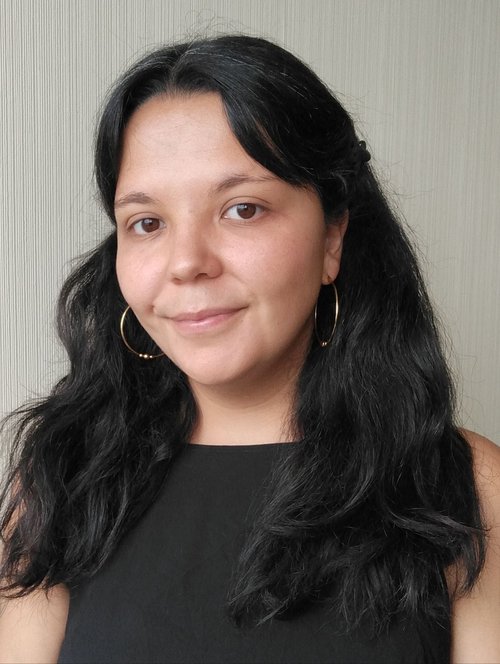
Melissa Fuentealba
Melissa studies the spatial structures appearing in the underground interaction between plants and fungi and how these affect the stability and productivity of the mutualism between the two, known as ectomycorrhiza.
Zihao Liu
Zihao combines analytical and numerical approaches to study pattern formation in ecological systems. He is also interested in applying population-dynamics frameworks to social systems, exploring phenomena such as opinion shifts, disease spreading, and marketing strategies.
Master Students
Timon B. Althaus
Timon is working on spatial population dynamics in heterogeneous landscapes. He is particularly interested in the joint effect of competition-colonization tradeoffs and habitat fragmentation in species interactions.

Vinicius Menuci
Vinicius is interested in studying how water-vegetation feedbacks shape plant interactions and how these lead to large-scale spatial patterns. To this end, he uses nonlinear dynamics, pattern formation and bifurcation theory and different computational techniques.
Khaled Yasein
Yasein studies stochastic evolutionary dynamics and is particularly interested in understanding how spatial structure and quorum-sensing regulation jointly impact the evolutionary stability of cooperation in microbial systems.
Research Interns
Omar Adel
Omar is curating a multidecade database of aerial images in order to develop new tools to quantify how vegetation patterns change over time.
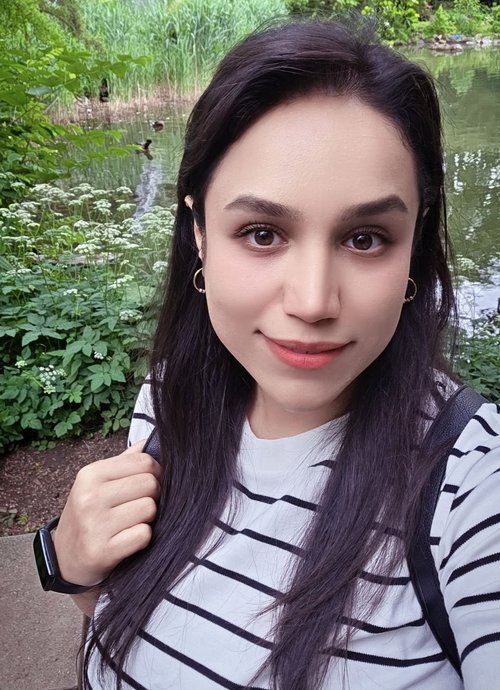
Roza Shah Mohammad Nejad
Roza investigates how precipitation and wind patterns impact the emergence of self-organized vegetation patterns in dryland ecosystems. Her work is supported by an Early Career Fellowship from the Scultetus Center at CASUS.
Alumni
Postdocs
- Ian Braga (2025–2026) — now postdoc, Academia Sinica, Taiwan.
- Anudeep Surendran (2023–2026) —
- Pablo de Castro (2022–2023) — now Assistant Professor, University of São Paulo, Brazil.
- Vivian Dornelas (2021–2023) — now Assistant Professor, Federal Univ. South of Bahia, Brazil.
- Jesus M. Encinas (2022) — now postdoc, University of Padova, Italy.
- Gabriel A. Maciel (2020–2022) — now Data Scientist at Carpa Analytics, Curitiba, Brazil.
PhD Students
- Rafael Menezes (2025) — now postdoc, ICTP-SAIFR, São Paulo, Brazil. Thesis
- Nathan Silvano (2024) — now postdoc, IFISC, Mallorca, Spain (co-supervised with Daniel Barci, UERJ, Brazil). Thesis
Master Students
- João Valeriano (2021–2023) — now PhD student, Turing Center for Living Systems, Aix-Marseille University. Thesis
- Daniel Jorge (2021–2023) — now PhD student, Princeton University. Thesis
- Benjamin Garcia de Figueiredo (2020–2023) — now PhD student, Princeton University. Thesis
- Jairo M. Rojas (2019–2020) — now PhD student, University of Illinois at Urbana-Champaign. Thesis
- Rodrigo Martinez (2018, co-supervised with Manuel Matías, IFISC) — now postdoc, Donostia Int. Physics Center. Thesis
- Victor Buendía (2017, co-supervised with Manuel Matías, IFISC) — now senior postdoc, Bocconi University. Thesis
Visiting Students
- Saira Sakhi (2026) — now Undergraduate student, Karakoram International University, Gilgit, Pakistan.
- Pablo Gaitán Ruz (2025) — now Undergraduate student, Universidad de Granada, Spain.
- Roza Shah Mohammad Nejad (2025) — now Master student, TU Bergakademie Freiberg, Germany.
- Maksim Prusakov (2025) — now Master student, TU Dresden, Germany.
- Maciej Tadej (2025) — now Assistant and PhD student, University of Wroclaw, Wroclaw, Poland.
- Matheus Bongestab (2024) — now Postdoc, Instituto Superior Técnico, Lisbon, Portugal.
- Belén Hidalgo (2024) — now PhD student, Max Planck Institute for Dynamics and Self-Organization, Göttingen, Germany.